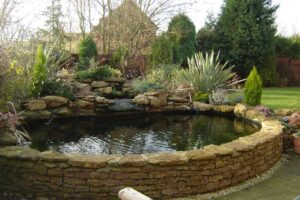
Your Garden Ponds Service Center also prides itself on pond landscaping and gardening. With our comprehensive service offering and the unparalleled expertise of our licensed staff, we can proudly transform any garden pond into a blissful retreat.
Design and construction aside, Your Garden Ponds Service Center also takes care of custom installations to give your garden pond a unique look and feel. Some of the services that we support involve the installation of aeration systems, installation of fiberglass ponds and more.
Whether you are looking for water lilies or Japanese koi to complete your garden pond set, Your Garden Ponds Service Center has you covered. Our water lilies are available in hardy or tropical variants, and they both come in pink, red, and white colors.
Your Garden Ponds Service Center also prides itself on pond landscaping and gardening. With our comprehensive service offering and the unparalleled expertise of our licensed staff, we can proudly transform any garden pond into a blissful retreat.
It is extremely vital for garden pond owners to do the regular maintenance of their pond to keep the water clean and their fish healthy as a result. Here are the following service tips on garden pond installation and upkeep that you need to apply.
More Landscaping
Apart from the key service offerings mentioned previously, we also provide a comprehensive range of landscape services, which include the excavation for landscaping and the construction of stone walls. We even offer top-grade products and components that are easy to maintain.
180
Ponds Installed
123
Landscaping Works
35
Maintenances
179
Happy Clients
Testimonials
Best Pond Services Company!
Having moved a few weeks ago and inherited a pond, a leak developed in the hose. Steve visited to assess the problem, replaced hose inlet and outlet, fitted new pump and the pond and waterfall effect are working beautifully. Very pleased with service, thanks!
Every significant development that takes place in your pond boils down to metabolism.
Algae and bacteria ratio, oxygen level, rain, and sunlight are some of the most typical factors that contribute heavily to the metabolisms of life in the pond. Although the majority of these contributing factors are unpredictable and impossible to control, there is one of many cases wherein you can tell that it is easy to predict and manage the impact of metabolism on your pond. The impact of pond water temperature on fish metabolism is one such instance.
Since pond fish are cold-blooded, their metabolisms are greatly affected by the weather…
Pond water changes color over time, and brown or the tea-colored sort is among the most common pigments most koi pond owners will notice. Thankfully, this pigmentation can still be treated as long as you know the root cause of the problem and how to go about solving it.
The Root Cause
One key instance that causes water to turn brown or become tea-colored is the building up of tannins in it. A tannin is a form of a molecule that comes from specific species of plants. When plants break down and their leaves fall into the pond, they release tannins that apply such a glow to the water as a result.
The Solution
…
Japanese koi are widely known to be a low-maintenance type of fish when it comes to raising them. A few great things about koi are that they are very beautiful to look at and they can adapt to dynamic weather conditions or several climates. Koi typically spawn during spring and lay eggs, but how can you determine if they are pregnant?
1. Check If the Belly Looks Bumpy or Rounded
Look at your aquatic pet and check if the belly appears a bit bumpy or rounded. A pregnant koi’s physical appearance is best described as having an almost bloated look. You may notice that the pregnant koi looks like holding small marbles …